


Xinghan — Dahua's new generation of large-scale AI models
Xinghan (Chinese for “galaxy”) is Dahua's large-scale AI model platform, launched worldwide in 2025. The difference is not that the camera recognises something new — it is that it analyses the scene as a whole rather than individual objects. In practice that means longer detection range, far fewer false alarms, and setup you no longer have to draw by hand.
1. Three model families
Xinghan is not one model but three families covering different kinds of data:
| Family | What it processes | What reaches the camera |
|---|---|---|
| Vision | images and video | perimeter protection, WizTracking, crowd map, scene-adaptive setup, smart object detection |
| Multimodal | image + text + sensor together | WizSeek (search in words) and text-defined alarms |
| Language | language | understanding queries and natural-language interaction |
2. Perimeter protection — further out, fewer false alarms
Previous CNN-based AI needed a person to be at least 45×45 pixels in frame to detect them reliably. Xinghan copes with 20×20 pixels — and that single change moves the detection range from 40 metres to 60.
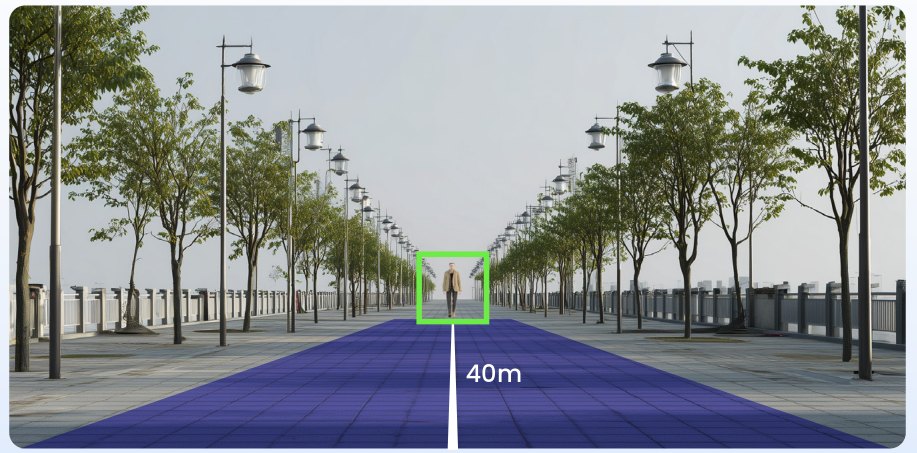
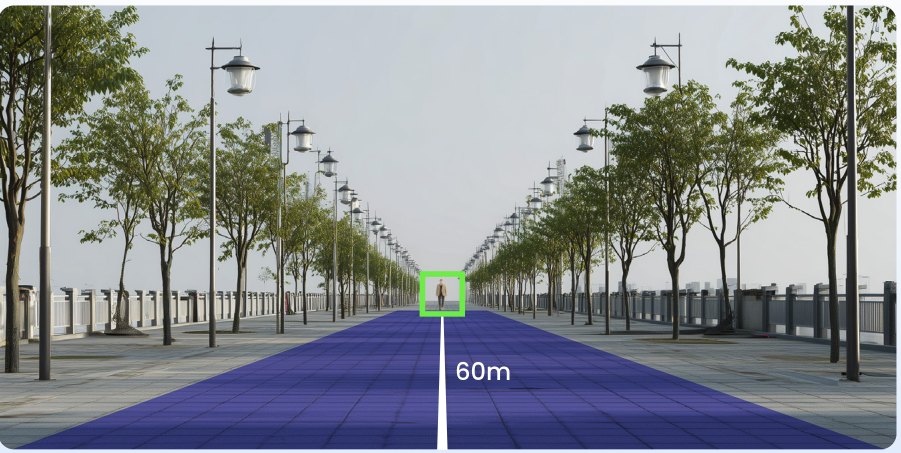
“92% fewer false alarms” means a cat, a branch or the headlights of a passing car no longer trigger the system at night. False alarms are the reason perimeter detection so often gets switched off — and detection that is switched off protects nothing.
The camera draws the zones itself
AI Rule Assist reads the scene and proposes intrusion zones on its own. The installer no longer has to trace every area by hand or decide exactly where the boundary goes — the camera understands where the lawn, the path and the pond are, and leaves out the areas that do not matter.
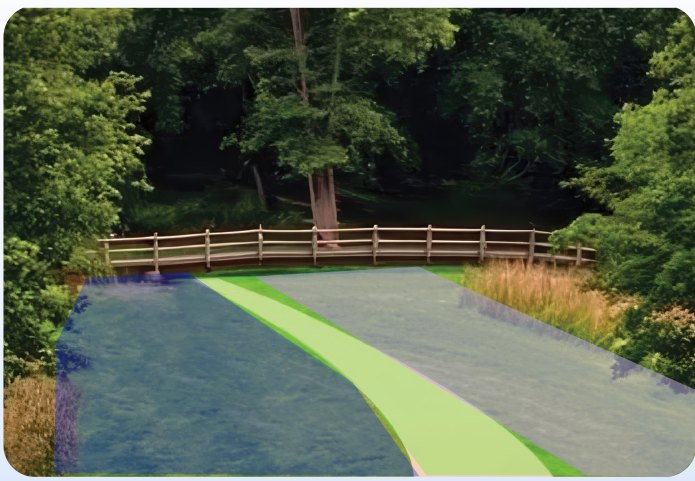
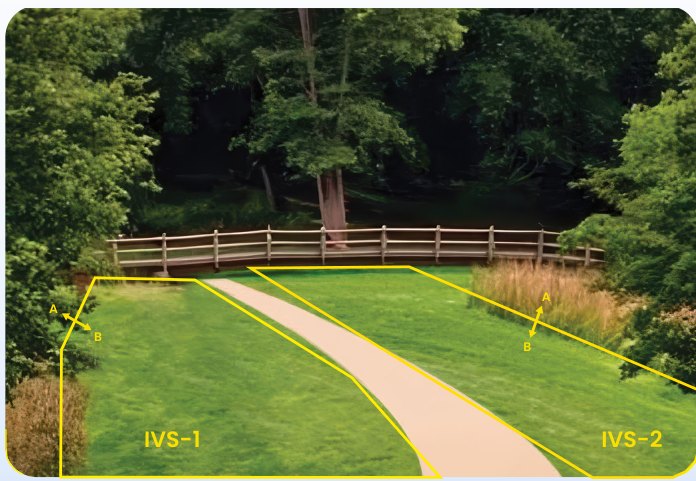
Animals as their own class
Xinghan recognises more than ten animal species (cattle, goat, horse, reindeer, bear, bird, cat, dog, lion, tiger, elephant, monkey) with over 90% accuracy. This is not for zoos: it means an animal does not raise a human alarm, and that a farm or hunting ground can deliberately configure an “animal detected” notice.
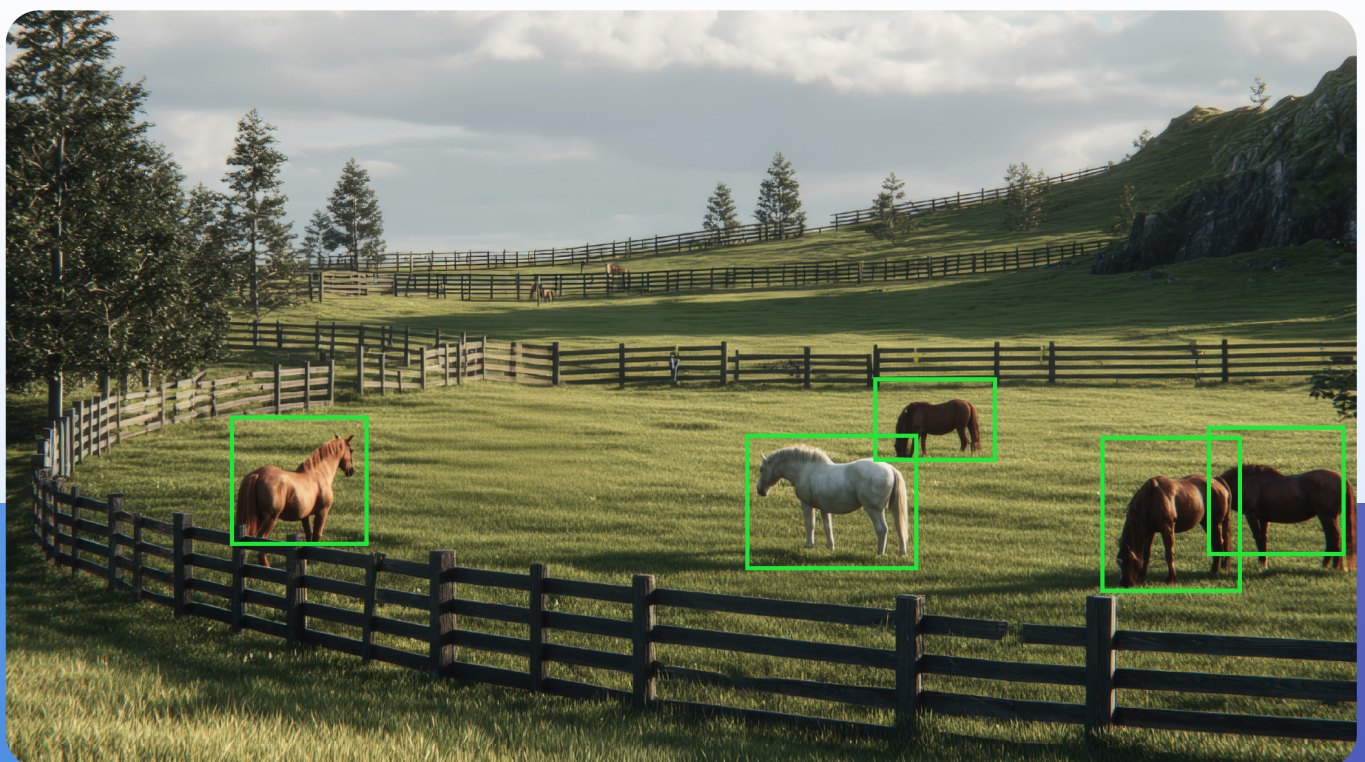
Why this cuts false alarms. Previous AI had to classify an animal as either a person, a vehicle, or “other motion” — the first gave a false alarm, the last meant a real intruder was not distinguished from an animal. A separate animal class solves both.
In Estonian conditions roe deer, foxes and cats are the most common source of false alarms, which makes this one of the most tangible changes.
3. WizTracking — the target does not disappear behind cover
The old weakness of PTZ auto-tracking: the person crouches, crawls or steps behind a car, the camera loses them and returns to its home position. Xinghan's WizTracking follows body keypoints (the shoulder line, for instance) rather than the whole silhouette, so it copes with both occlusion and changes of posture. Accuracy improved by around 50%.


4. Scene-adaptive imaging — AI WDR
Backlight is the classic case where the picture becomes useless: a person coming through a door is just a black silhouette. WDR solves it, but left permanently on it degrades the image in ordinary conditions. Xinghan recognises the backlit situation itself and switches WDR on and off to suit the scene.

5. Crowd map
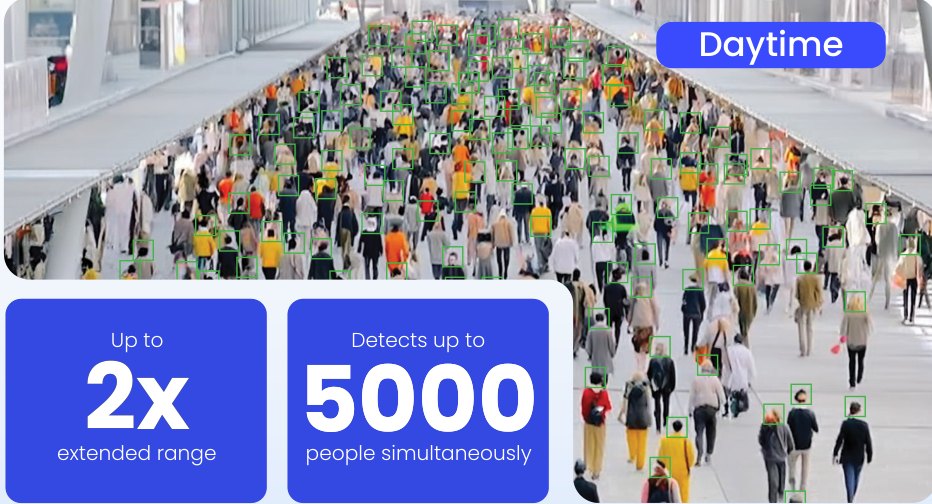
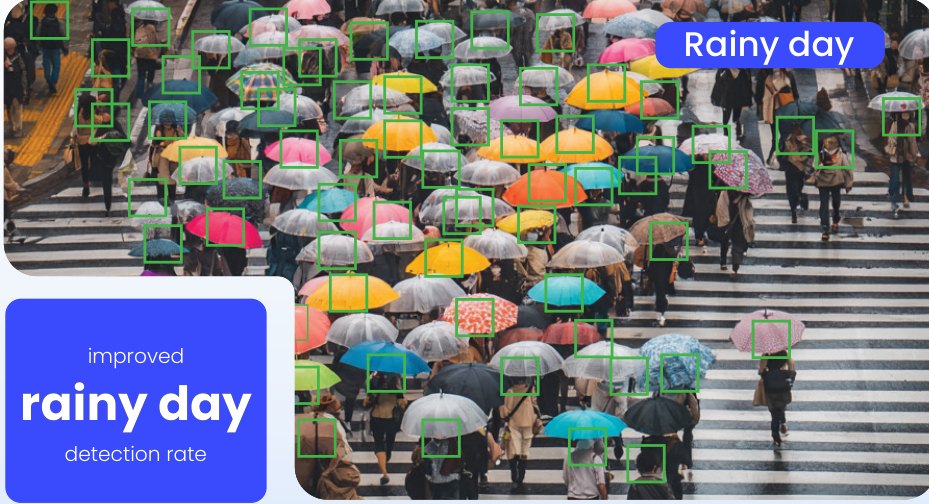
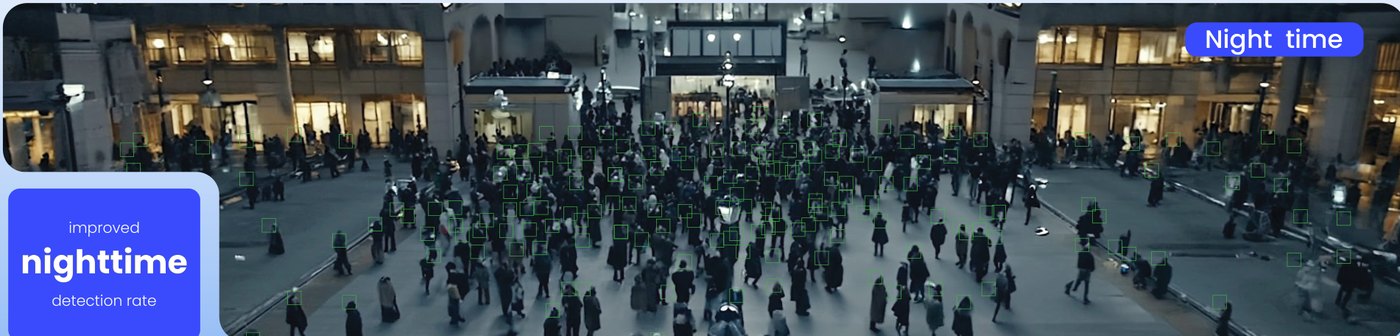
Counting a crowded area means picking out small targets at a distance — exactly what a large model does better. Xinghan's crowd map covers up to twice the distance and counts up to 5000 people at once. Umbrellas, which used to hide people from these systems entirely, are handled separately.
6. Smart object detection
Five main categories and 13 subtypes: transport (motorcycle, bicycle, tricycle), electronics (laptop, monitor, keyboard, mobile phone), public fittings (bin, fire extinguisher, shopping trolley, pushchair) and bags and packages (suitcase, backpack, wallet, bag, box, gas cylinder). Accuracy above 90%.
Two uses that mirror each other:
- Abandoned object — a bag left in a waiting room or on a platform.
- Missing object — a fire extinguisher that was on the wall and is not any more.
7. Search in words — WizSeek
The most tangible change for anyone working with recordings. Instead of scrolling through hours of footage or searching from a single reference image, you type who you are looking for — “workers carrying parcels”, say — and the system brings up the frames.

- Search by voice, text or image, from the DMSS app, in over 30 languages.
- More than 400 categories — people, vehicles, animals, signs, plants.
- The recorder processes up to 16 targets per second.
8. Alarm rules written as text
Text-Defined Alarms means a new alarm rule can be written as a sentence — “a person carrying a red backpack”, for example — and the device turns it into an algorithm. No programming, and nobody has to train a separate model for it.
An IVSS recorder can also refine the rule itself: the operator marks an alarm true or false and the algorithm keeps learning on the device.
9. Which devices have Xinghan
| Device | What Xinghan adds there |
|---|---|
| IP cameras — IPC-3, IPC-5 and IPC-7 series, panoramic cameras | longer detection range, fewer false alarms; higher series add animal detection, AI Rule Assist and smart object detection |
| PTZ cameras — SD5A, SD6E, SD7A, SD8X, PTZ83, Hubble and others | WizTracking; crowd map on the panoramic series |
| Recorders — NVR5-EI2, NVR5-XI/Pro | WizSeek and text-defined alarms, even with ordinary cameras |
| IVSS and IVD — IVSS51-I, IVSS71-I, IVD5148-I, IVD5348-I | multimodal mode, several algorithms per channel, on-device retraining |
The Xinghan range keeps growing. Tell us what the site is and what is not working today — we will say whether Xinghan solves it or a cheaper series is enough. For installers, technical help and support in designing the solution are free of charge.
Get in touch All Dahua camera technologiesSource: Dahua Technology, “Xinghan Large-Scale AI Models”, version 2, June 2026. All figures come from the manufacturer's measurements in a standard test environment, and the detection-range examples are based on the IPC-5 series 4 MP / 3.6 mm model — on a real site the result depends on mounting, lighting and lens. Images: the same brochure.