


HDCVI 9.0 — modern analogue surveillance over the coax you already have
HDCVI is Dahua's technology for carrying a high-definition image to the recorder over ordinary coaxial cable. The point is simple: if the building already has coax, there is no need to pull network cable or build a network. HDCVI 9.0 is the newest generation and brings things an analogue system never used to have — smart illumination, panoramic cameras, search, and privacy protection.
1. Smart Light+ — white light that does not dazzle
Ordinary white supplementary light always has the same three problems: there is too little of it (the image turns hazy), it is spread unevenly (overexposed close up, black further away), and detail is lost to light scattering in the air.
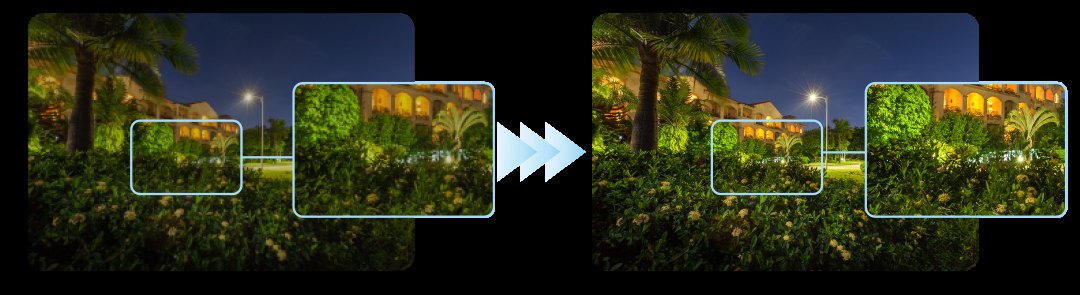
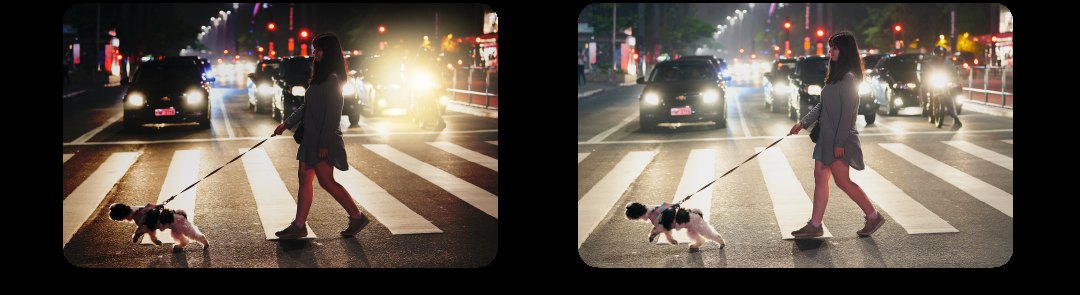
The camera also adjusts brightness by itself and keeps the detail of a moving target (person, vehicle) legible while a static frame stays bright.
2. PT MultiVision — overview and detail at the same time
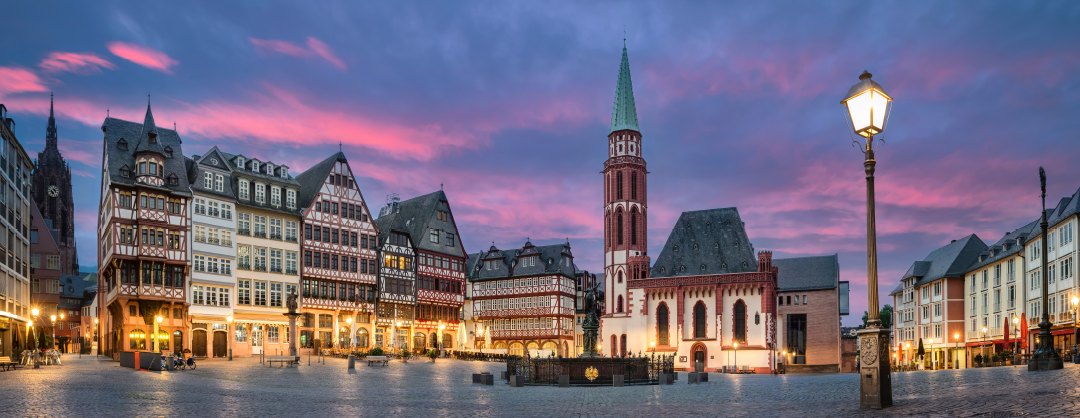
A pan-tilt mechanism and several lenses in one housing. One such camera replaces several ordinary ones and gives a wide overview and a close-up at once.
| Model | What it does |
|---|---|
| Owl Eyes | Two 1080p sensors with 2.8 mm and 6 mm lenses — up to 6× hybrid zoom. Detail from at least 50 m away. |
| Black Warrior | The images from two lenses are stitched into a single 180° panorama. With the recorder's EPTZ it can zoom into detail and track the target that triggered the alarm at the same time. |
| Guarder | A separate fixed lens alongside the pan-tilt lens — two areas at once. Clicking a spot in the fixed image turns the other lens there for the detail. |
3. QuickPick 2.0 — search in an analogue system too
Searching recordings is no longer only an IP-system thing. QuickPick filters out the human and vehicle clips, so there is far less to review by hand. Besides clothing colour, 2.0 also recognises headwear and clothing type, which makes the search considerably more accurate.
4. Privacy protection
A camera that sees a neighbour's window or the street is a legal question, not only a technical one. HDCVI 9.0 provides two tools for it:
- Real-time face mosaic — up to 12 faces at once (depending on the model). The original can be restored when necessary, but only by an administrator — which matters, because it makes restoration a deliberate and traceable act.
- Irregular masking — up to four areas of the image can be blanked out and they no longer have to be rectangles. In practice that means a neighbour's window can be covered without cutting off part of your own yard.
Tell us what cable is on site and what cameras are running — we will check whether changing the cameras and recorder is enough. For installers, technical help and support in designing the solution are free of charge.
Get in touch All Dahua camera technologiesSource: Dahua Technology, “HDCVI 9.0” (dahuasecurity.com, Key Technologies). Figures are the manufacturer's. Images: the same page.